Hedge Trimming Knightsbridge — Recycling and Sustainability
 Hedge Trimming Knightsbridge is committed to making every pruning, shaping and clearance job as eco-conscious as possible. Our approach to sustainable hedge maintenance in Knightsbridge balances high-quality garden care with responsible waste management: prioritising reuse, composting and recycling over landfill. We work within the urban context of central London and align our practices with borough waste policies to ensure that garden waste and cut material are treated as a resource, not refuse.
Our sustainable rubbish gardening area protocols include on-site segregation of green waste, clean wood, and mixed garden detritus so that materials enter the correct recycling streams. We have set a measurable recycling percentage target to drive progress; this target is used to evaluate every seasonal round of hedge care and to plan improvements in our waste handling and transport. The aim is to demonstrate that elite hedge care and environmental stewardship can go hand in hand for the neighbourhoods we serve.
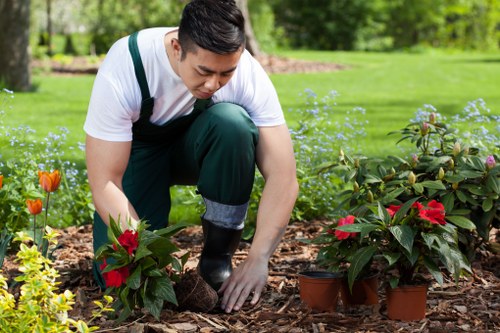 To make this work in practice we integrate the boroughs' approach to waste separation—dry recycling (paper, card, glass, metal), food/compostable collections and garden waste—into our site routines. Our Knightsbridge hedge trimming teams receive training on local bin codes and the Royal Borough of Kensington & Chelsea green waste schemes so that cuttings destined for composting are separated from treated timber or contaminated material. This reduces contamination rates and improves the yield of reusable compost and mulch.
Targets, Transfer Stations and Waste Flow
We are transparent about targets: our current corporate goal is to achieve a 70% recycling rate for all materials arising from hedge and garden work within three years. To reach this we map waste flows from kerbside collection points to authorised local transfer stations and recycling centres. Key local transfer stations and facilities we use include borough-approved depots and licensed sites where green waste is processed into compost, wood is chipped for biomass or garden mulch, and recyclable inert materials are diverted from landfill.
Partnerships with Charities and Reuse Schemes
We partner with local charities and community organisations that accept suitable reclaimed timber, planters and reusable landscaping materials. When an item is in good condition—such as sturdy stakes, untreated wooden planters or structural timbers from garden fixtures—we coordinate donation to charities that support community gardens, allotments and local social enterprises. These partnerships help close the loop on resource use and support social value in Knightsbridge and neighbouring boroughs.Our collaborations emphasise repair, reuse and repurpose. For materials that cannot be donated, we prioritise chipping for mulch, composting for organic matter, and routing metals and plastics to dedicated recycling streams. We also work with suppliers and clients to avoid unnecessary packaging and to specify sustainably sourced materials for replacements and new installations.
Fleet and Low-Carbon Transport: a practical part of eco-friendly hedge trimming in Knightsbridge is reducing emissions from collection and transfer. Our commitment includes investing in low-carbon vans and using the most efficient routes and load planning. The fleet includes hybrid and electric light vans where operationally feasible, and we monitor CO2 emissions per job as part of our environmental metrics. This reduces the carbon footprint associated with transporting waste to transfer stations and recycling centres.
 Local recycling activities that affect our work often reflect the Royal Borough’s separation guidance: green sack collections for garden waste, communal dry recycling points for paper and glass, and dedicated food/compost rounds. Our teams adapt to these systems by separating materials on-site into discrete containers—green waste for composting, clean untreated timber for chipping, small quantities of metal and plastic for recycling, and contaminated items that require special handling.
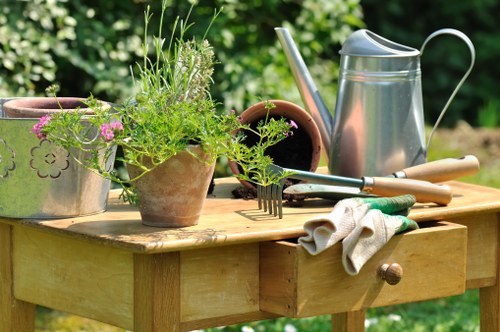 In practical terms this means our sustainable rubbish gardening area is not an afterthought but a planned part of every job. We create temporary sorting zones during larger jobs to segregate branches, leaves, turf, and built elements. Leaves and small green trimmings go to compost; larger branches are chipped into mulch; and any recyclable packaging or fittings are placed in the correct stream. This reduces landfill, lowers disposal costs and creates useful end-products for local landscaping.
Our environmental procedure is backed by records and audits: each job includes a waste log that records weight, destination (transfer station, charity, composting), and the proportion recycled. These logs enable us to report progress toward our 70% recycling target, refine routing to reduce vehicle miles, and identify opportunities for greater reuse. We also provide clear advice to clients about how to prepare sites to maximise recycling—removing contaminants, separating materials and deciding which elements can be salvaged for donation or reuse.
Finally, our long-term vision for Knightsbridge hedge care is to create a replicable model of low-impact garden maintenance that other urban horticultural businesses can adopt. By combining trained crews, low-carbon vans, partnerships with local charities, and use of approved transfer stations, Hedge Trimming Knightsbridge demonstrates that high-quality garden services can contribute positively to a circular local economy and to the boroughs’ wider sustainability ambitions.
Commitment in action: we maintain transparent reporting, continual staff training, and ongoing collaboration with local recycling partners so that every hedge job helps build greener streets and healthier soils across Knightsbridge.